
Kingsport, TN · Garage Door Service
Is Your Kingsport Garage Door Worth Fixing, or Done
Kingsport homes built 1970-2001 still run original hardware. Here's how the cold climate wears it down and when repair still beats replacement.
- Repairs & new doors
- Springs & openers
- Serving 6 nearby communities
What the Weather Here Does to It
Kingsport sits in a cold-moderate band, and that matters more to a garage door than most owners think. The swing between a hard freeze overnight and a sunny afternoon in the 40s and 50s does something steel and wood don't love: it expands and contracts the panel skin faster than the frame around it. Over a winter that happens dozens of times, not once. On a door that's already 20 or 30 years old, that's enough to pop seams on a steel panel, crack the glazing compound around old window inserts, and loosen the screws holding hinges to a panel that's flexed one too many times. Houses across the 15 communities we work in - Colonial Heights, Bloomingdale, Gray, Church Hill, and the rest - mostly went up in that 1960s-70s to 1970-2001 window, so a huge share of the doors out there are original or close to it. They weren't built for a freeze-thaw cycle this frequent, because nobody builds a garage door for one specific climate band. They're built to a national average, and Kingsport's winters ask more of the hardware than that average assumes.
The Problem
Most of the service-area housing stock dates to 1970-2001, with a median build year around 1978. That means a huge number of doors out there are hitting the age where the torsion spring, the rollers, and the track alignment are all original equipment, not replacement parts. A spring rated for a certain number of cycles doesn't care how well you maintained it once it's past that number - it's going to break on a cold morning, often the coldest one of the stretch, because cold steel is more brittle steel. The second problem is hardware mismatch. A door that age may have hinges or a track gauge that newer opener kits weren't designed around, so a straightforward opener swap sometimes exposes a worn track or bent hinge that was fine until something else changed. Neither of these is a reason to panic. It's a reason to know what you're looking at before you pay for a fix.
Checking It Yourself
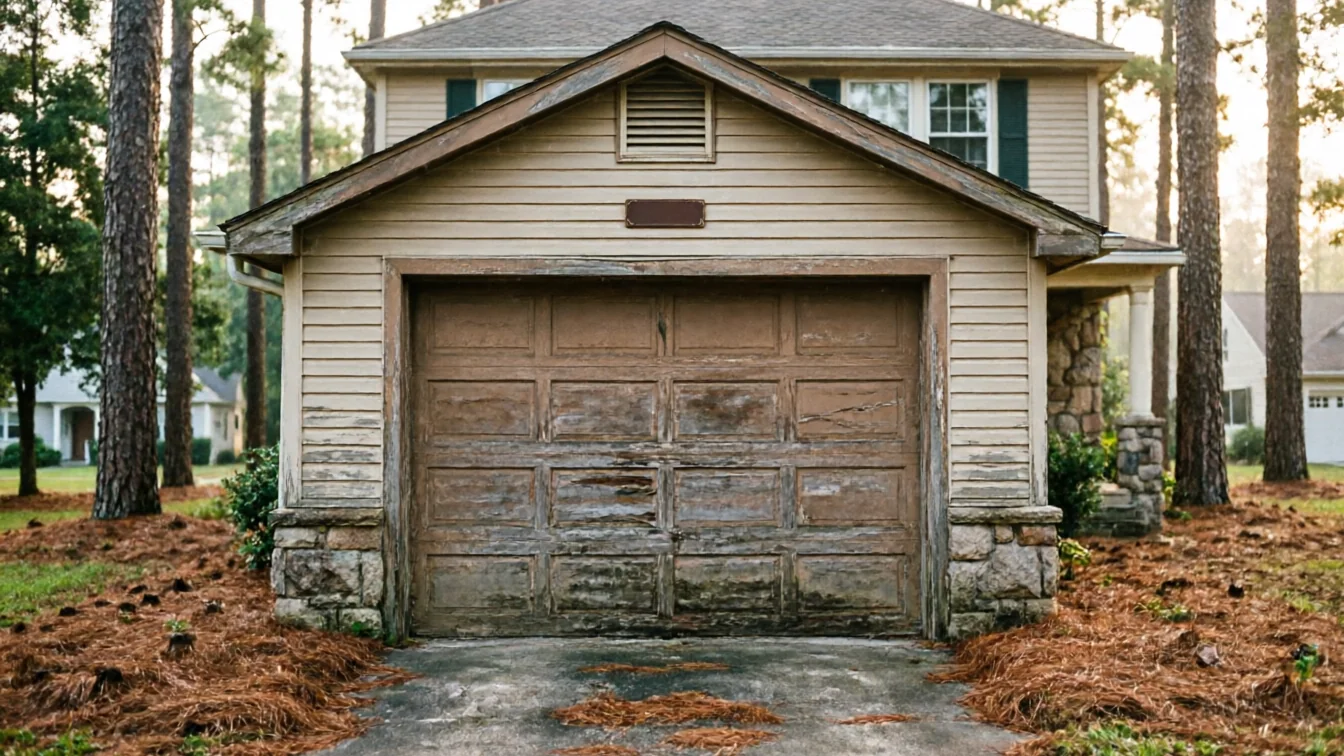
Before you call anyone, look at four things. First, the springs above the door - rust, gaps in the coil, or a visible stretch mean replace, not grease. Second, the rollers: if they're steel and original to a pre-2001 build, they're likely worn oval instead of round, and that's what causes the jerky, uneven travel owners describe as "something's wrong" without knowing what. Third, check the bottom panel for seam separation where the freeze-thaw cycling has worked a weld or seam loose - a door that's visibly bowed at the bottom corners is further gone than it looks. Fourth, listen for grinding at the top of the track during travel; that's often a bent track section, not a motor problem, and it's a different repair entirely. We're not going to pretend every one of these is a quick fix. A bowed panel on a door old enough that the manufacturer no longer stocks that panel size is usually a replacement conversation, not a repair one, and we'll tell you that straight instead of billing you for parts that won't outlast the rest of the door.
Season by Season
Fall is the window to deal with springs and rollers before the first hard freeze locks up a marginal part. A spring that's merely stretched in October is often a spring that snaps in January, so catching it early costs less and happens on your schedule instead of an emergency one. Winter is when brittle steel and stiff old lubricant show every weakness at once - this is when original-hardware doors from the area's 1970s-era housing stock tend to fail outright. Spring is cleanup season: check for the seam and hinge damage the freeze-thaw cycle left behind, even if the door still opens fine. Summer is the only season that's forgiving here, and it's the right time for anything that isn't urgent - full hardware inspection, track realignment, or deciding whether a door that's made it this far is worth one more repair or whether the next cold season should be its last.
Frequently asked questions
My house in Kingsport was built in the late 1970s - is the garage door original?
It's possible. A lot of housing in the service area, including Colonial Heights and Bloomingdale, dates to that 1970s window, and many of those doors are still running close to original hardware. If the springs look original and the rollers are steel, assume it's at least 20-plus years on the same parts and inspect before winter.
Why do garage door springs break more in winter here?
Cold steel is more brittle steel, and Kingsport's cold-moderate climate puts the hardware through repeated freeze-thaw swings over a winter. A spring that's already near the end of its cycle life is far more likely to snap on a cold morning than a mild one.
Should I repair or replace an older door?
Depends what's wrong. Springs, rollers, and openers are usually worth replacing on their own. A bowed or seam-separated panel on a door old enough that matching panels aren't available anymore is a different call - at that point replacement often costs less over time than chasing repairs on a dying door.
How do I know if my rollers are worn out?
Jerky or uneven travel, especially partway up the track, usually means the rollers have worn oval instead of staying round - common on original steel rollers from older builds. It's a cheap fix compared to what it does to the track and opener if left alone.
Related garage door services in Kingsport
More garage door guides
Book garage door service in Kingsport
Call now or request a quote - tell us what the door is doing and where you are.