
Kingsport, TN · Garage Door Service
When a Spring Goes in Cold Weather
Kingsport homes built mostly 1970-2001 see spring failures when cold hits. Here's what the weather does to your door and how to check it yourself before it fails.
- Repairs & new doors
- Springs & openers
- Serving 6 nearby communities
What the Weather Here Does to It
Kingsport sits in a cold moderate climate band, and that matters more than most homeowners think. Steel contracts when the temperature drops, and a torsion spring that's been doing fine all fall can lose enough tension overnight to snap the next time the door cycles. It's not the cold alone that does it - it's the swing. A door that goes from a 50-degree garage in the evening to well below freezing by morning is putting more stress on that spring's coil than it saw all summer.
Most of the housing stock across this service area, including the fifteen named areas we work in from Colonial Heights out to Central, was built between 1970 and 2001, with a lot of it clustered in that 1960s-70s era of construction. That means a big share of the doors still in service are original hardware, or close to it, on springs that were never rated for 40-plus years of temperature swings. A spring that's lasted this long on a 1978-built house isn't lasting because it's strong. It's lasting because nobody's asked it to do much lately. Cold weather is what asks.
The Problem
The actual failure point is almost always the same: a torsion spring that's fatigued from age and thermal cycling finally lets go on a cold morning, usually when the door is opened for the first time that day. You'll hear a bang, sometimes loud enough to think something fell in the garage, and then the door either won't move or comes down heavy and fast when you try the opener.
On the older stock common in this area - doors installed anywhere near that 1970-2001 build window - the springs were sized for the door and the climate expectations of their install date, not for decades of cold snaps since. Galvanized coating wears thin, the steel gets brittle at the microscopic level, and a cold morning is just the trigger, not the cause. We don't replace a spring because it's cold outside. We replace it because the cold finally found the weak point that was already there.
Checking It Yourself
You can look at a few things before calling anyone. Open the garage door manually with the opener disconnected - pull the red release cord - and see how it feels. A properly balanced door should stay roughly where you leave it, maybe drifting a little. If it crashes down or shoots up, the spring tension is off, and that's worse in cold weather, not better.
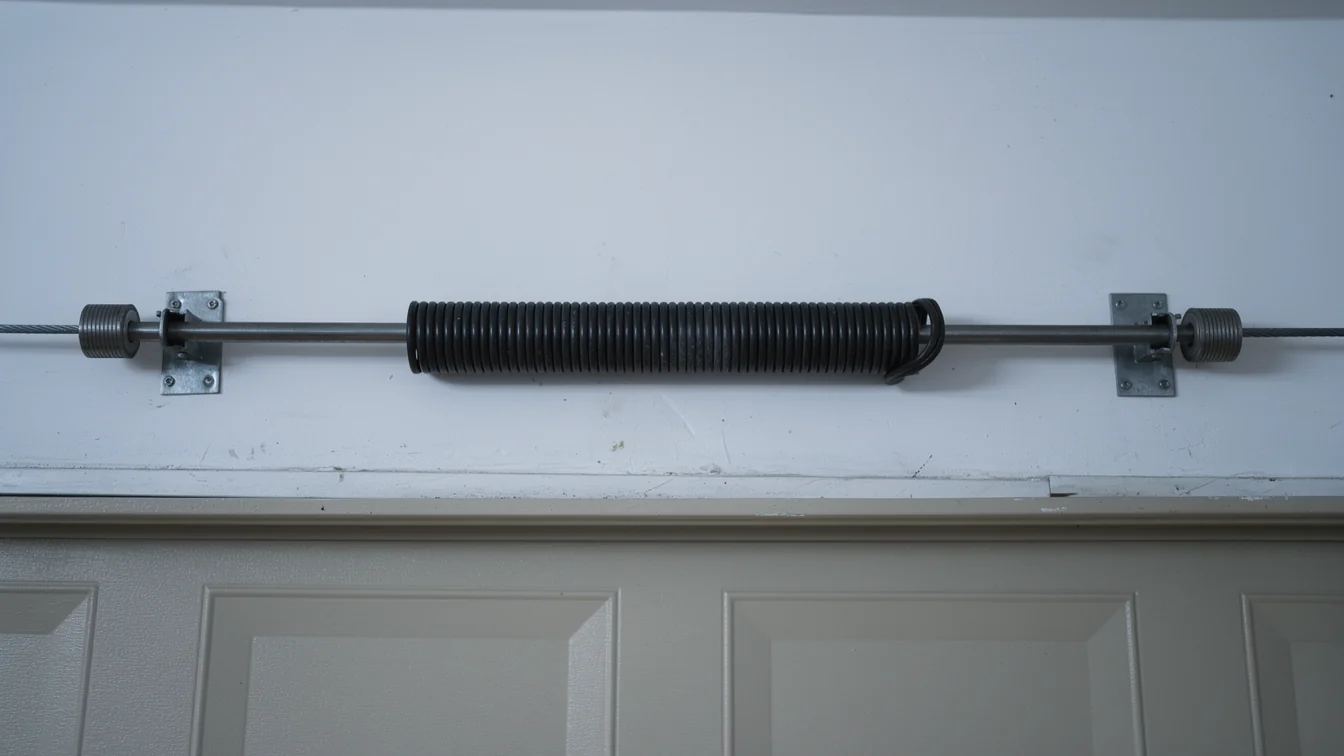
Look at the spring itself, usually mounted horizontally above the door. A visible gap in one of the coils means it's broken, full stop - don't run the opener. Surface rust is common on older installs and isn't an emergency by itself, but flaking rust combined with a stiff, hard-to-turn torsion bar is a sign the whole assembly is past due.
Here's the honest limit: if you see a broken coil, stop. Don't try to wind or release tension on a torsion spring yourself. That's the one repair where a mistake costs more than a service call, and it's not something this page is going to walk you through doing solo.
Season by Season
Fall is the window to get ahead of it, before the first hard freeze hits. A spring that's borderline in October is a spring that fails in December, usually at 6 a.m. when you need the door up.
Winter is when the calls come in, and the pattern holds across every one of the fifteen areas we cover, from the older sections near Colonial Heights and Bloomingdale out to Blountville and Bristol. Cold mornings, aging torsion springs, doors that sat fine all summer.
Spring and summer are lower-urgency, but that's exactly when it pays to get a spring checked if you noticed anything rough over the winter - a slow close, a grinding sound, a door that felt heavier than it should. Fixing it in July means you're not the one standing in a cold driveway in January watching a broken coil instead of your car.
Frequently asked questions
Why does my garage door spring always seem to break in winter?
Steel contracts in the cold, and a spring that's already fatigued from age loses just enough give that the next cycle snaps it. Houses in this area built between 1970 and 2001 often still have original or early-replacement springs, and those weren't built to handle 40-plus years of cold-weather cycling.
Is it safe to open my garage door manually if the spring looks broken?
You can pull the release cord to disconnect the opener, but don't force the door up if you see a gap in the spring coil. Without tension, the door is heavy and uncontrolled. That's a call for a professional, not a DIY fix.
How often should I have my springs checked given the age of houses around here?
If your home dates to that common 1970-2001 construction window across this area, a yearly check before cold weather sets in is worth it, especially if the spring hasn't been replaced since the house was built.
Related garage door services in Kingsport
More garage door guides
Book garage door service in Kingsport
Call now or request a quote - tell us what the door is doing and where you are.